jueves, 11 de junio de 2015

BARROCO EN ESPAÑA

Barroco español


Barroco español o Barroco en España1 es un concepto de la historiografía del arte, de la literatura y de la música, y genéricamente de la historia de la cultura,2 que se utiliza para clasificar y definir las manifestaciones culturales de la época del Barroco (aproximadamente el siglo y medio entre 1600 y 1750) localizadas en España.
Aunque es más propio para la época denominar Monarquía Hispánica o Imperio español al espacio político gobernado por el rey de España o Su Católica Majestad (los Austrias menores -Felipe III de España, Felipe IV de España y Carlos II de España- y el primer Borbón -Felipe V de España-), la bibliografía suele delimitar la extensión del uso de la expresión "Barroco español" a las producciones artísticas de la Corte (en Madrid excepto el breve periodo de 1601-1605 en que estuvo en Valladolid) y a las de los territorios de las Coronas de Castilla y de Aragón y el reino de Navarra. En ese espacio, no homogéneo, también se distinguen escuelas locales,3 especialmente la escuela madrileña (o Barroco madrileño),4 la escuela sevillana (o Barroco sevillano),5 la escuela valenciana (o Barroco valenciano),6 la escuela vallisoletana (también denominada castellana o de Gregorio Fernández -Barroco vallisoletano o castellano-),7 la escuela salmantina (o Barroco salmantino o churrigueresco),8 la escuela gallega (o Barroco gallego),9 la escuela catalana (o Barroco catalán),10 la escuela aragonesa (o Barroco aragonés),11 etc.12 Para la región de Murcia y el Levante se ha definido un estilo local denominado Barroco mediterráneo.13
No suelen englobarse en el término Barroco español ni el Barroco portugués (Portugal se independiza en 1640),14 ni el Barroco italiano de Milán, Sicilia o Nápoles (con la presencia de José Ribera el Españoleto), ni el Barroco flamenco, ni siquiera el Barroco colonial15 americano o filipino (arte colonial hispanoamericano), aunque a veces se emplea la expresión Barroco español en América16 o Barroco hispanoamericano.17 El denominado Barroco novohispano hace referencia al virreinato de Nueva España.

El Niño Jesús con ángeles músicos, de


Juan Correa (México, 1645-1716).


ESCULTURA.


Escultura barroca es la denominación historiográfica de las producciones escultóricas de la época barroca (de comienzos del siglo XVII a mediados del siglo XVIII).

Sus características generales son:

  • Naturalismo, es decir, representación de la naturaleza tal y como es, sin idealizarla.

  • Integración en la arquitectura, que proporciona intensidad dramática.

  • Esquemas compositivos libres del geometrismo y la proporción equilibrada propia de la escultura del Renacimiento pleno. La escultura barroca busca el movimiento; se proyecta dinámicamente hacia afuera con líneas de tensión complejas, especialmente la helicoidal o serpentinata, y multiplicidad de planos y puntos de vista. Esta inestabilidad se manifiesta en la inquietud de personajes y escenas, en la amplitud y ampulosidad de los ropajes, en el contraste de texturas y superficies, a veces en la inclusión de distintos materiales, todo lo cual que produce fuertes efectos lumínicos y visuales.

  • Representación del desnudo en su estado puro, como una acción congelada, conseguido mediante una composición asimétrica, donde predominan las diagonales y serpentinatas, las poses sesgadas y oblicuas, el escorzo y los contornos difusos e intermitentes, que dirigen la obra hacia el espectador con gran expresividad.

  • A pesar de la identificación del Barroco con un "arte de la Contrarreforma", adecuado al sentimiento de la devoción popular, la escultura barroca, incluso en los países católicos, tuvo una gran pluralidad de temas (religiosos, funerarios, mitológicos, retratos, etc.)

  • La manifestación principal es la estatuaria, utilizada para la ornamentación de espacios interiores y exteriores de los edificios, así como de los espacios abiertos, tanto privados (jardines) como públicos (plazas). Las fuentes son un tipo escultórico particularmente adecuado al estilo barroco. Particularmente en España, tuvieron un extraordinario desarrollo la imaginería y los retablos.

En España también se manifestó en imágenes religiosas talladas en madera, en la llamada imaginería con la que se esperaba despertar la fe del pueblo.


PINTURA. 


Rembrandt van Rijn, La ronda de noche o La compañía del Capitán Frans Banning Cocq, 1642, óleo sobre lienzo, 363 × 437 cm., Rijksmuseum, Ámsterdam. La pintura es un ejemplo clásico del arte barroco.

La pintura barroca es la pintura relacionada con el movimiento cultural barroco. El movimiento a menudo se le identifica con el absolutismo, la Contrarreforma y el renacimiento católico,1 2 pero la existencia de importante arte y arquitectura barrocos en países no absolutistas y protestantes por toda Europa Occidental evidencian su amplia popularidad.3 La pintura adquirió un papel prioritario dentro de las manifestaciones artísticas, y llegó a ser la expresión más característica del peso de la religión en los países católicos y del gusto burgués en los países protestantes.

La mejor y más importante pintura durante el período que comienza alrededor del año 1600 y continúa a lo largo de todo el siglo XVII, y a principios del siglo XVIII se identifica hoy como pintura barroca. El arte barroco se caracteriza por el realismo, los colores ricos e intensos, y fuertes luces y sombras. En oposición al arte renacentista, que normalmente mostraba el momento anterior a ocurrir cualquier acontecimiento, los artistas barrocos elegían el punto más dramático, el momento en que la acción estaba ocurriendo: Miguel Ángel, que trabajó durante el Alto Renacimiento, muestra a su David compuesto y quieto antes de luchar contra Goliat; el David barroco de Bernini es captado en el acto de lanzar la piedra contra el gigante. El arte barroco pretendía evocar la emoción y la pasión en lugar de la tranquila racionalidad que había sido apreciada durante el Renacimiento.

Entre los más grandes pintores del período barroco se encuentran Caravaggio,4 Rembrandt,5 Rubens,6 Velázquez, Poussin,7 y Vermeer.8 Caravaggio es heredero de la pintura humanista del Alto Renacimiento. Su enfoque realista de la figura humana, pintada directamente del natural e iluminada dramáticamente contra un fondo oscuro, sorprendió a sus contemporáneos y abrió un nuevo capítulo en la historia de la pintura. La pintura barroca a menudo dramatiza las escenas usando los efectos lumínicos del claroscuro; esto puede verse en obras de Rembrandt, Vermeer, Le Nain y La Tour. El pintor flamenco Antón Van Dyck desarrolló un estilo de retrato cortesano, con gracia, que influyó mucho, especialmente en Inglaterra.

La prosperidad de la Holanda del siglo XVII llevó a una enorme producción artística por gran número de pintores altamente especializados, que sólo pintaban el género al que se dedicaban: escenas de género, paisajes, bodegones, retratos o pintura de historia. Los estándares técnicos eran muy altos, y la Edad de Oro holandesa estableció un nuevo repertorio de temas que fueron muy influyentes hasta la llegada del Modernismo.


viernes, 5 de junio de 2015

THE HABSUBRG DYNASTY

1. THE EMPIRE OF CHARLES I

1.1 HEIR TO AN EMPIRE

Charles I of Spain, how was also Charles V of Germany, was the son of Joanna os Castile (daughter of the Catholic Monarch) And the German prince Philip of Habsburg. His inheritance included:

·From his mother's side, the kingdom of Catile, Navarre, The Crown of Aragon and territories in America and Italy.


· From fahter's side, the Netherlands, luxerburg and Franche-Comté. When his grandfather, the emperor maximilian, died, he also inherited his German territories and was given the title os Emperor.

1.2 PROBLEMS WITHIN THE EMPIRE

Charles I ruled  from 1516 to 1559 but took little intered in the Iberian Peninsula. Several revolts took place during his reign:

·The revolts of the comuneros (1520-1521) was an uprising of nobles, the bourgeoisie and the peasants  of Castile against the king's economic policy.
The revolt was the defeated by the army of Charles I.

·The revolt of the Brotherhoods (1521-1523) was an uprising of the artian and peasants  in Valencia and Mallorca. The artians wanted access to goverment officie and the peasants wanted better rental conditions. The king's army supprussed the revolts.


1.3 PROBLEMS ABROAD 

Charles I also found against foreing powers to defend his authority and the Catholic religion:

·He went to war with France (1525-1544), his great Europeans rival, and defeated the French army in the Battle of Pavia.

·He fought the Turks ( 1529 - 1541), who threatened to invade the area around the rivar Danube and the Mediterranean and sea.

·He confronted the German princes, who supported Lutheram reform. After several wars, the Emperor was froced to accept Catholics and Protestants as equals and signed the Peace of Augsburg (1555)


Resultado de imagen de Battle of muhlberg


2.THE SPANISH EMPIRE OF PHILIP II

2.1PHILIP II'S GOBERNMENT

In 1556, Charles I gave the tittle of Emperor  of Germany and his Austrian territories to his yonger son Ferdinand. He gave the rest of his territories, which included Spain, to his olsder son Philip.

Philip II goverment very differently frim his father.
He paid special attetion to the interests os the Spanish monarchy and issued political orders from Madrid, which became the state capital in 1561.

THe power of the monarchy increased as Philip II made all political decision with the help of an army of civil servant. As a result, the Cortes was very rarely convened.

Phipip II extended the symtem os advisory councils.
He also established royal officials called corregidors to represent rroyal authrity in local areas.

Philip II continued his father's fight against Protestantism. He used the Inquisition to persecuted people sespected of not being true Catholics. PHilip's repression of MUslim cinvert in Andalusia led to the Morisco Revolt of 1568, which was suppressed in 1571.


 2.2FOREIGN POLICY


   Philip II tried to maintain Spanish power in Europe an impose the Catholic religion. Tjis policy led his forces into several armed conflicts:

 -Against the French, who he defeated in the Bsttle of Saint-Quentin in 1557.

-Against the Turks, who he defeated in the Battle of Lepanto in 1571.

-Against England, wich supported the Protestants and attacked Spanish ships trading with America. He sent the Spanish Armada ti invade England, but the fleet was destroyed in a storm.

-Against Flanders, wich revolted against high taxes and suffered because of the religious conflict. Philip II sent tercios (infrante formationa) of the area, but they were unable to resolve the problem.


When the king of Portugal died without an heir, Philip II annexed Portugal.


3. SPAINSH ECONOMY AND SOCIETY IN THE

3.1 THE ECONOMY

Durieng the 16th century, large amounts of gold and silver were brought to Spain from America. THis caused price rises, reducing the purchasing power and standard os living os ordinary people.

An increase in the demad for goods from America led to growth in trade and commerce.

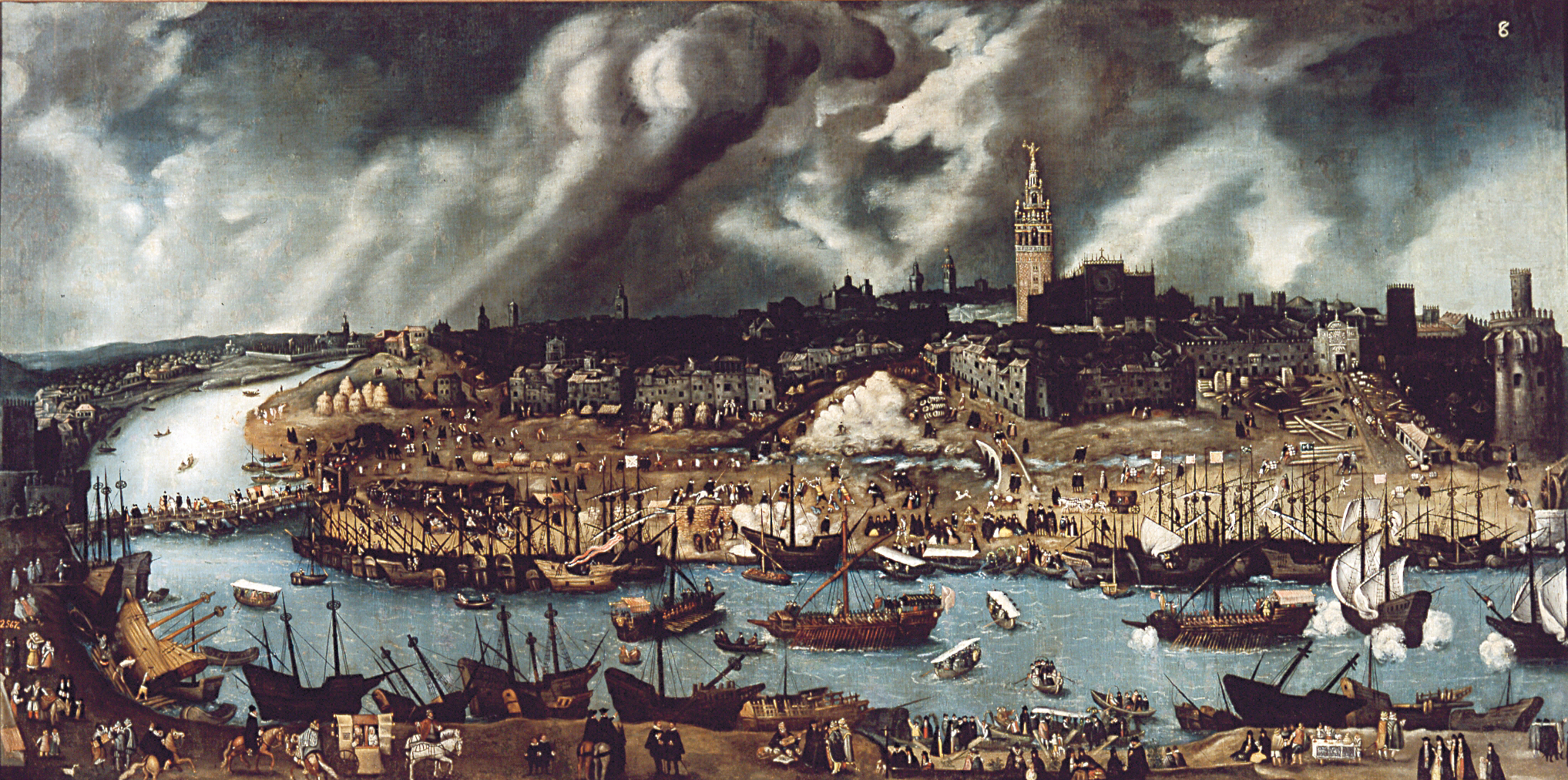
Most trade took place in Catilian cities and Atloantic ports, such as Seville.

Spanish and foreign traders brought goods from all over Europe to the IBerian Peninsula. TRaders then distributed American goods such as cocoa, sugar and coffe across the European continent.

Spain could not meet the domestic demand for agricultural products. Most of the land belomged to the aristocracy or the Church and was used mostly for livestock farming.


16TH CENTURY

3.2 SOCIETY

  In the 16th century, the population of Spain increased, especially in Castile. The majority of the population continued to live in countryside, and the cities had few inhabitants.

   The orivileged class was made up of nobles and clergy, who owned most of the land. Eighty percent of the population were peasants (pecheros), who paid taxes and had limited rights.

   Oher groups of Spanish society included Moriscos (convert in Muslims) and converted Jews. These groups were the constant targets of religious and ethnic persecution.


Resultado de imagen de portrait of andrea doria alvaro bazan and luis de requesens three 16th century nobles

THE DECLINE OF THE  EMPIRE IN THE 17TH CENTURY

4.1. PHILIP III: THE GOMERNMENT OF FAVOURITES

   Monarch in the 17th century left governing to favourites, who became very powerful ministers.
During his short reign, Philip III delegated power to the Duke of Lerma, who maintained peaceb abroad.

   In 1609, Philip III ordered the expulsion of the Moriscos from the Peninsula. This made the shortage fo agricultural products worse because the majpority of Moriscos were peasants and many rural areas were left almost unpopulated.ç


PHILI IV : THE END OF EUROPEAN DOMINANCE.


Philip IV appointed the Count-Duke os Olivares as his favourite. He wanted to maintain Habsburg dominance in Europe.

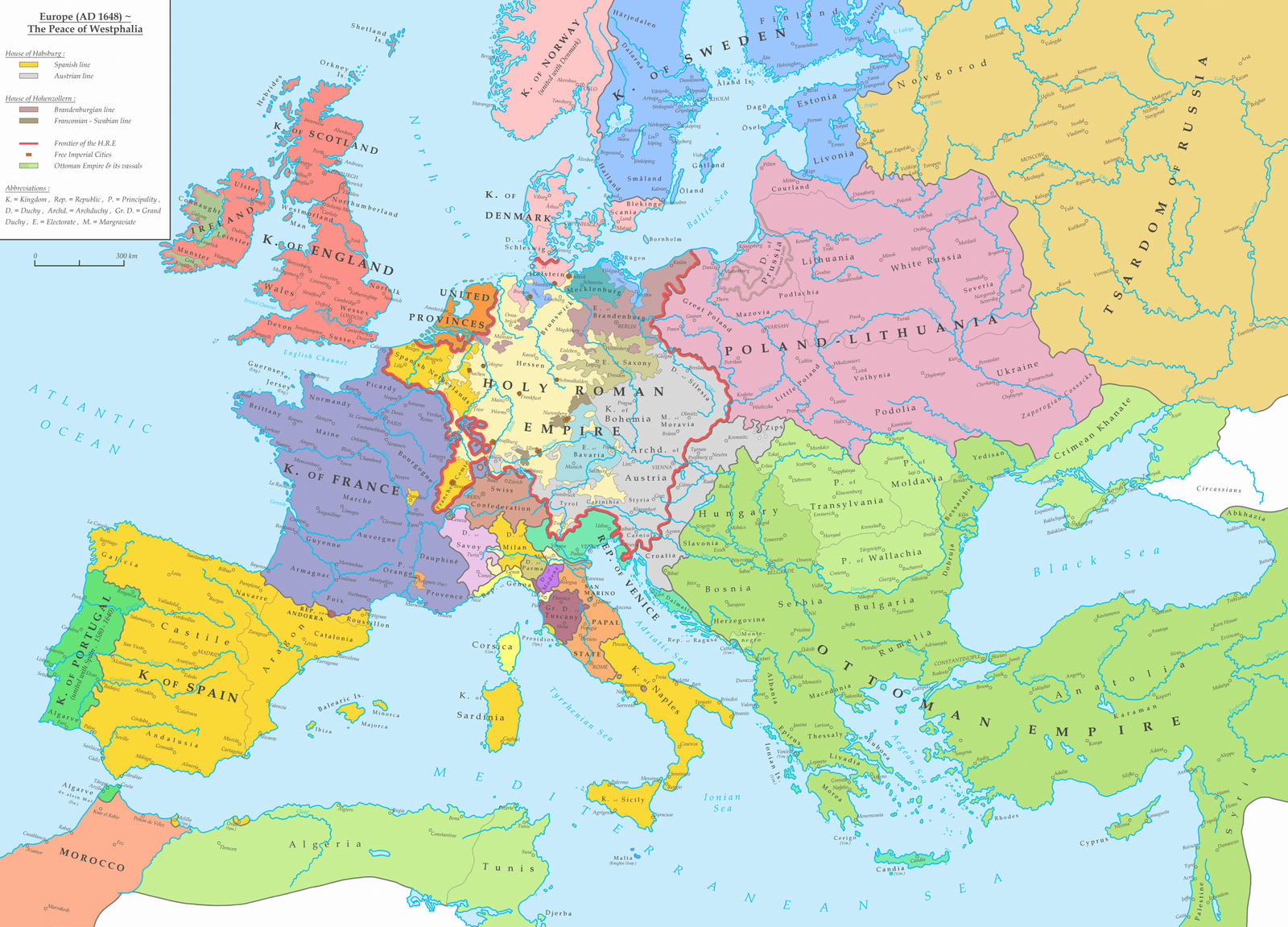
This policy led to a war with France known as the Thrity Years' War (1618-1648). The war ended with the signing os the Peace os Westphalia treaty in 1648, in wich Spain recognised the independence of the Netherlands.

In 1649, there were popular uprisings in Andalusia, Portugal and Catalonia against Olivares's demand for soldiers and taxes to support the war.

In Andalusia the revolt was suppessed, but Portugal managed to separated from the Spanish Crown with support from England and France.

Catalonia also received help from the French and the ensuing conflict continued until 1652. The war between Spain and France finally ended with the singning of the Treaty os the Pyrenees in 1659, in which Roussillon and Artois became part os France.


4.3 CHARLES II: CRISIS IN THE HASBURG MONARCHY 

    Spain experienced a period of crisis during the regin of Charles II, Spain's last Hasburg monarch. The crisisi was caused by the king's incompetence, corruption among his favourites and a number of economic problems.

   When Charles II died without an heir in 1700, the War opf the Spanish Succession broke out between Philip of FRance's Bourbon dynasty and Charles of Austria. The victory of the French brougth an end to the Habsburg monarchy in Spàin.

Resultado de imagen de the surrender of breda by velazquez


 5.1CRISIS IN THE CROWN OS CASTILE

In the 17th century, there was a sharp decreased in the population os Castile because of emigration to America, wars, epidemics and the expulsion of the Moriscos.

As agricultural conditions worsedned, many peasants moved to cities. Livestock farming also suffered, after years of war and drought had destroyed pastureland.

During this period, industry and trade decreased significantly because of foreign competition, poverty and limited demand for goods from America.

While the nobles acquired more new property and other luxuries, the peasant, artisans and hidalgos struggled to survive the economic crisis. Many people became pícaros, begging and stealing on the city streets.


5.2 THE CRISIS AND THE CROWN OS ARAGON

   The crisis did not have the same affect on places like Aragon, wich had not been central to American trade. In the 17th century, Aragon's more stable economy allowed new trading companies to appear, and silk textile industry also  began.


Resultado de imagen de The economic crisis particularly affect the poorest segments of the population, crating homeless beggars and vagabonds


Realizated by: Paula Guerrero Muñoz y María Guerrero Suárez.