martes, 2 de diciembre de 2014

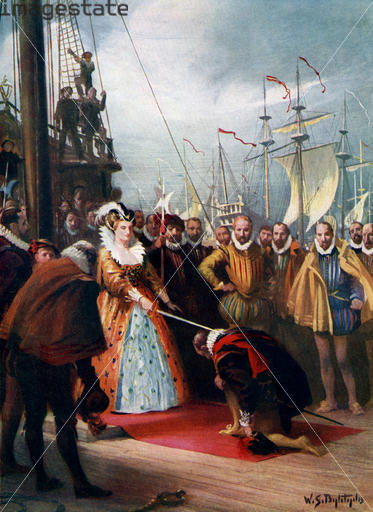
Warriors nobles and feudalism

Feudalism is the name of the predominant political system in Western Europe in the middle centuries of the Middle Ages and Eastern Europe in the Modern Age, characterized by the decentralization of political power; to be based on the diffusion of power from the top (where in theory the emperor or the kings were) to the base where local power is actually exercised with great autonomy or independence by an aristocracy, called nobility, whose titles derived from governors of the Carolingian Empire (dukes, marquises, counts) or had another origin (barons, knights, etc.)

The term "feudalism" is also used to refer historiográficamente historical social formations characterized by the mode of production that historical materialism (Marxist historiography) called feudal.

In the Middle Ages, the institution of chivalry was related to a code of conduct and honor that defined not only the art of war, but also implied social behavior.
To arm and mount a warrior is very expensive, so medieval chivalry appears fully linked to the phenomenon of feudalism. Knights are lords or advantaged subjects with social and economic power, also keep the exclusivity of the cavalry to his class. Initially protected with a full suit of chainmail (Coif, brafoneras and breastplate) and a helmet that grows in size to become the twelfth century in a large, heavy metal bucket resting on his chest and back.


lunes, 27 de octubre de 2014

Reinos Taifas

Las taifas fueron un conjunto de pequeños estados (states), fueron hasta 39 pequeños reinos (kingdoms)


Cada taifa al principio se identifico con una familia, clan o dinastía.
Sin embargo, las cuelas podían subdividirse o concentrarse con el paso de tiempo hizo evidente que solo un poder político (political order) podía resistir el avance cristiano del norte.

RELACIÓN DE TAIFAS DEL PRIMER PERIODO :


SEGUNDO REINOS DE TAIFAS :


Cuando el dominio almorávide empezó a decaer, surgieron los llamados segundos reinos de taifas (1144-1170), que fueron posteriormente sometidos por los almohades, que habían sucedido a los almorávides en su dominio (domain) del norte de África.


domingo, 19 de octubre de 2014

What are the main ideas of Islam?

Muslims believe in one, unique, incomparable God, Who has no son nor partner, and that none has the right to be worshipped but Him alone.  He is the true God, and every other deity is false.  He has the most magnificent names and sublime perfect attributes.  No one shares His divinity, nor His attributes.

Muslims believe in the existence of the angels and that they are honored creatures.  The angels worship God alone, obey Him, and act only by His command.  Among the angels is Gabriel, who brought down the Quran to Muhammad

Muslims believe that God revealed books to His messengers as proof for mankind and as guidance for them.  Among these books is the Quran, which God revealed to the Prophet Muhammad.God has guaranteed the Quran’s protection from any corruption or distortion.  

Muslims believe in the prophets and messengers of God, starting with Adam, including Noah, Abraham, Ishmael, Isaac, Jacob, Moses, and Jesus (peace be upon them).  But God’s final message to man, a reconfirmation of the eternal message, was revealed to the Prophet Muhammad .  Muslims believe that Muhammad
Muslims believe that all the prophets and messengers were created human beings who had none of the divine qualities of God.


Muslims believe in Al-Qadar, which is Divine Predestination, but this belief in Divine Predestination does not mean that human beings do not have freewill.  Rather, Muslims believe that God has given human beings freewill.  This means that they can choose right or wrong and that they are responsible for their choices.
The belief in Divine Predestination includes belief in four things: 1) God knows everything.  He knows what has happened and what will happen.  2) God has recorded all that has happened and all that will happen.  3) Whatever God wills to happen happens, and whatever He wills not to happen does not happen.  4) God is the Creator of everything.


miércoles, 8 de octubre de 2014

Muhammad

Muhammad (whose name means "highly praised") was born in Mecca in 570 AD. His father died shortly before his birth, and he lost his mother at the age of six. The young orphan was then raised primarily by his uncle, for whom he worked as a shepherd. At age 9 (some sources say 12), he joined his uncle on a caravan to Syria. (Also seeMecca and Muslim beliefs and Islamic history)
As a young man, Muhammad worked as a camel driver between Syria and Arabia. Soon he established a career managing caravans on behalf of merchants. Through his travel first with his uncle and later in his career, Muhammad came into contact with people of many nationalities and faiths, including JewsChristians and pagans. (Alsocompare Islam with Judaism and Christianity on this chart)
At age 25, Muhammad was employed by Khadija, a wealthy Meccan widow 15 years his senior. The two were married, and by all accounts had a loving and happy marriage. Early records state that "[Allah] comforted him through her, for she made his burden light." Although polygamy was common practice at the time, Muhammad took no other wife until her death 24 years later. (See more about Allah in Islam)