Sometime in the 13th century, paper money and playing cards from China reached the West. They were "block-printed," that is, characters or pictures were carved into a wooden block, inked, and then transferred to paper. Since each word, phrase or picture was on a separate block, this method of reproduction was expensive and time-consuming.
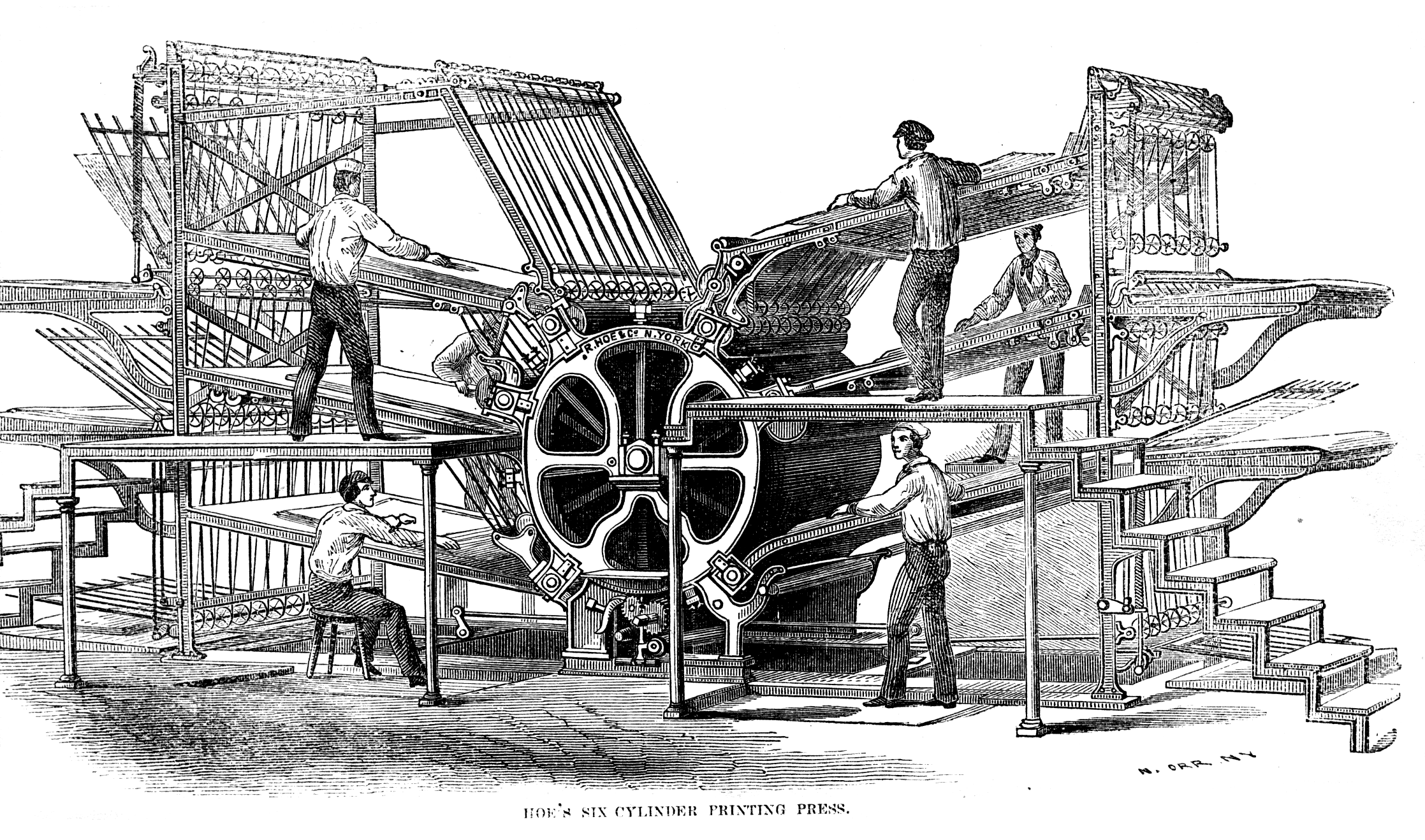
The immediate effect of the printing press was to multiply the output and cut the costs of books. It thus made information available to a much larger segment of the population who were, of course, eager for information of any variety. Libraries could now store greater quantities of information at much lower cost. Printing also facilitated the dissemination and preservation of knowledge in standardized form -- this was most important in the advance of science, technology and scholarship. The printing press certainly initiated an "information revolution" on par with the Internet today. Printing could and did spread new ideas quickly and with greater impact.
Printing stimulated the literacy of lay people and eventually came to have a deep and lasting impact on their private lives. Although most of the earliest books dealt with religious subjects, students, businessmen, and upper and middle class people bought books on all subjects. Printers responded with moralizing, medical, practical and travel manuals. Printing provided a superior basis for scholarship and prevented the further corruption of texts through hand copying. By giving all scholars the same text to work from, it made progress in critical scholarship and science faster and more reliable.



No hay comentarios:
Publicar un comentario